5 Mistakes That Get Work Visa Applications Rejected
Thousands of work visa applications are rejected every year for avoidable reasons. Here are the 5 most common mistakes — and exactly how to prevent each one.
March 25, 2026

5 Mistakes That Get Work Visa Applications Rejected
Every year, tens of thousands of work visa applications across Europe are rejected. The frustrating part? The vast majority of these rejections are caused by avoidable mistakes — errors that have nothing to do with the applicant's qualifications or the strength of their job offer.
A rejected application does not just mean disappointment. It means lost time (often months), wasted money on application fees, and in some cases, a negative mark on your immigration record that makes future applications harder.
After processing over 3,720 successful placements across Poland, Serbia, and Albania, World Wide Services has seen every type of rejection — and every type of mistake that causes them. Here are the five most common, and exactly how to avoid each one.
Mistake 1: Incomplete or Inconsistent Documents
Why it happens: Visa applications require multiple documents from different sources — birth certificates, educational qualifications, police clearances, medical certificates, bank statements, and more. When applicants gather these themselves, things get missed or mismatched.
Common examples:
- Submitting documents without certified translations (most European embassies require sworn translations into the local language or English)
- Forms that are partially filled in or left unsigned
- Documents issued by the wrong authority (e.g., a police clearance from your local station instead of the national police headquarters)
- Name spelled differently across documents (Mohammed vs. Muhammad vs. Mohamed — embassies treat these as discrepancies)
- Photocopies submitted where originals are required
- Documents older than the accepted validity period (most must be issued within 3-6 months)
The impact: Incomplete applications are the number one reason for rejection. Most embassies will not contact you to request missing documents — they simply deny the application.
How to Prevent It
- Use a document checklist specific to your destination country. Every country has different requirements.
- Verify every document against the embassy's official requirements before submitting.
- Ensure name consistency across ALL documents. If your passport says "Mohammed" but your birth certificate says "Muhammad," get the discrepancy resolved before applying.
- Get certified translations from an authorized sworn translator — not a friend who speaks the language.
- Have a second person review your complete application package before submission. Fresh eyes catch mistakes you have become blind to.
- Keep originals AND copies of everything. Some embassies want originals; others want certified copies. Bring both.
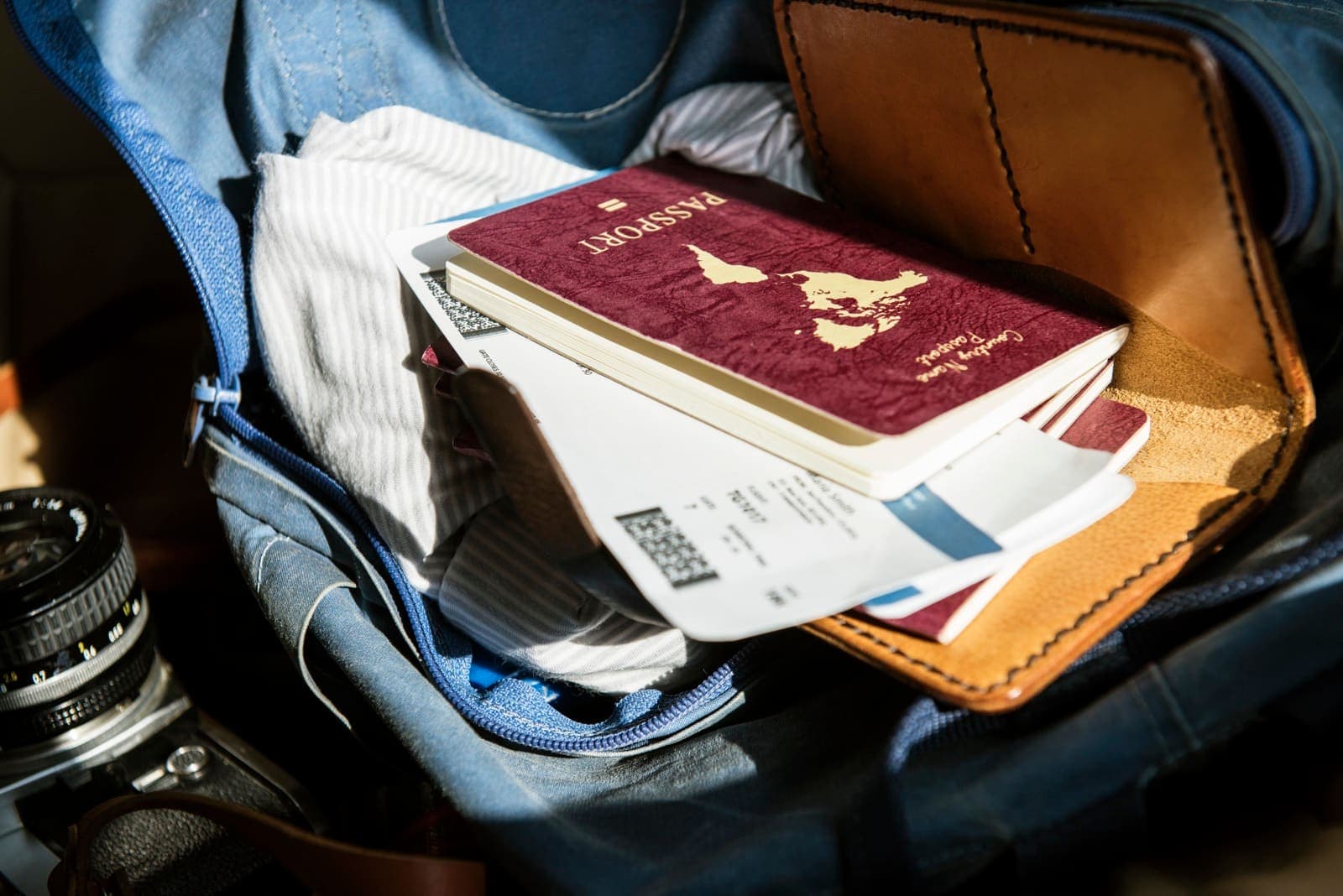
Mistake 2: Passport Validity Issues
Why it happens: Many applicants do not realize that having a valid passport is not enough. Immigration authorities have strict rules about HOW MUCH validity your passport must have.
The rules most people miss:
- Your passport must be valid for at least 6 months beyond your planned stay in most European countries. If you are applying for a 1-year work permit, your passport needs at least 18 months of validity remaining.
- You must have at least 2 blank visa pages available for stamps and visa stickers.
- The passport must be in good physical condition — no torn pages, water damage, or illegible information.
- Some countries require that your passport was issued within the last 10 years, regardless of the expiration date printed on it.
The impact: This is one of the most frustrating rejections because it is entirely about a technicality, not your qualifications. And passport renewal can take weeks or months in some countries.
How to Prevent It
- Check your passport expiration date the moment you start thinking about working abroad — not when you are ready to apply.
- Count forward: Add your intended stay length plus 6 months to today's date. Your passport must be valid beyond that date.
- Renew early if there is any doubt. It is always better to renew a passport with 12 months left than to risk a rejection.
- Check blank pages: Count them. If you have fewer than 3 blank pages, renew.
- Inspect physical condition: If your passport has any damage, get a replacement.
Mistake 3: Applying for the Wrong Visa Category
Why it happens: Visa categories are confusing. Different countries use different naming systems. And the internet is full of outdated or incorrect advice from forums and social media groups.
Common category errors:
- Applying for a tourist/visitor visa when you need a work visa. This is more common than you might think — some applicants believe they can enter on a tourist visa and "convert" it to a work visa later. In most European countries, this is illegal and will result in deportation.
- Choosing the wrong type of work permit. For example, Poland has different permits for seasonal work (up to 9 months) vs. standard employment (Type A permit). Applying for the wrong one delays everything.
- Applying for a student visa with the intention of working. While some student visas allow limited part-time work, they do not permit full-time employment.
- Confusing a business visa (for meetings and conferences) with a work visa (for employment).
The impact: Wrong category applications are automatically rejected. In some cases, they can flag your record as a potential immigration risk, making future applications more difficult.
How to Prevent It
- Consult the embassy website directly — not forums, Facebook groups, or "visa agents" on WhatsApp.
- Verify with your employer or recruitment agency which specific visa category and permit type your job requires.
- Read the visa category description carefully before applying. If it says "this visa does not permit employment," it means exactly that.
- Work with a licensed immigration agency that knows the specific requirements for each country and job type.
Mistake 4: Insufficient Financial Proof
Why it happens: Many countries require applicants to prove they have enough money to support themselves during their initial period abroad. The specific requirements vary by country, and applicants often underestimate what is needed.
Country-specific financial requirements:
| Country | Minimum Required | Period | Notes |
|---|---|---|---|
| Poland | PLN 776/month (~EUR 180) | 3 months of statements | Must show consistent balance, not a one-time deposit |
| Serbia | Varies by permit type | Bank statement | Employer sponsorship can substitute |
| Germany | EUR 11,208/year in blocked account | 12 months | One of the highest requirements in Europe |
| Czech Republic | CZK 87,120/year (~EUR 3,500) | Proof of funds | Can be shown through employment contract |
Common financial proof mistakes:
- Depositing a large sum just before applying (embassies see this as artificial inflation and may reject)
- Providing bank statements with irregular or suspicious transaction patterns
- Submitting statements from accounts in someone else's name
- Not including all required pages of the bank statement
- Using bank statements older than 30 days
The impact: Financial insufficiency suggests to the embassy that you may become a burden on the host country's social system, which is grounds for rejection.
How to Prevent It
- Start saving early — maintain the required minimum balance for at least 3 months before your application date.
- Use your own bank account in your own name.
- Show consistent deposits, not sudden large transfers. A steady salary or regular income looks much better than a lump sum from an unknown source.
- Get official bank statements on bank letterhead with stamps — not printouts from online banking.
- If your employer provides accommodation and meals, get this in writing as it can reduce the financial proof requirement in some countries.
Mistake 5: Missing Embassy Follow-Up Deadlines
Why it happens: After submitting an application, many embassies request additional documents, clarifications, or updated information. These requests come with tight deadlines — typically 7-14 days. Applicants miss them because they do not check their email, do not recognize the embassy email address, or do not respond quickly enough.
How it typically goes wrong:
- The embassy sends an email requesting an additional document
- The email lands in the applicant's spam folder or promotions tab
- The applicant does not see it for 2-3 weeks
- The deadline passes
- The application is automatically rejected for "failure to provide requested information"
The impact: This is perhaps the most painful type of rejection because the application itself may have been strong — it was simply abandoned due to a missed communication.
How to Prevent It
- Check your email daily — including spam and promotions folders. Set this as a phone reminder if needed.
- Add the embassy's email domain to your email contacts or safe sender list so messages do not go to spam.
- Respond within 24-48 hours of receiving any embassy communication, even if it is just to acknowledge receipt and request more time.
- Keep your phone accessible at all times during the processing period. Some embassies call instead of emailing.
- Save the embassy's phone number in your contacts so you recognize incoming calls.
- If you have an agent or agency, ensure they also receive copies of all communications. WWS monitors every application actively and alerts clients immediately when embassy communications arrive.
Why Working With a Licensed Agency Reduces Rejection Risk
Every mistake above is preventable — but preventing them requires experience, attention to detail, and knowledge of each country's specific requirements. This is exactly what a licensed recruitment agency provides.
World Wide Services maintains a 97% approval rate across all destination countries because:
- Every document is reviewed against a country-specific checklist before submission
- Passport validity is verified at the start of the process
- The correct visa category is determined based on the specific job and destination
- Financial documentation is reviewed and prepared months in advance
- All embassy communications are monitored and responded to within hours
The cost of working with an agency is a fraction of the cost of a rejected application — both financially and in lost time.
What to Do If Your Application IS Rejected
If you have already received a rejection, do not panic. You have options:
- Understand the reason: The rejection letter should state why. If it does not, you may have the right to request clarification.
- Appeal: Some countries allow you to appeal the decision within a specific timeframe (usually 14-30 days).
- Reapply: In most cases, you can submit a new application with the issues corrected. There is usually no waiting period for work visa reapplications.
- Consider alternative countries: If one country rejects you, it does not affect applications to other countries. Serbia, Albania, and Poland each have independent processes.
- Get professional help: If you applied independently and were rejected, working with an experienced agency for your reapplication significantly increases your chances.
Frequently Asked Questions
Does a visa rejection affect future applications to other countries?
A rejection from one country does not automatically affect applications to other countries. However, some visa application forms ask whether you have been previously refused a visa anywhere. Always answer honestly.
How long after a rejection can I reapply?
For most European work visa categories, you can reapply immediately after correcting the issues that caused the rejection. There is typically no mandatory waiting period.
Will the embassy tell me exactly why I was rejected?
Most embassies provide a general reason (e.g., "insufficient financial documentation" or "incomplete application"). Some are more specific than others. You can usually request more detail in writing.
Can I get my application fee refunded after a rejection?
In almost all cases, no. Visa application fees are non-refundable regardless of the outcome. This is another reason to get your application right the first time.
Is it worth hiring a lawyer after a rejection?
For work visa rejections caused by documentation errors, working with an experienced recruitment agency is usually more effective and affordable than a lawyer. Agencies understand the specific requirements and common pitfalls for each country and job type.
Get It Right the First Time
A visa rejection is not the end of the road — but it is a setback that costs time, money, and emotional energy. The smartest approach is to avoid rejection entirely by preparing thoroughly and working with experienced professionals.
World Wide Services has helped over 3,720 workers successfully obtain work permits across Poland, Serbia, and Albania with a 97% approval rate. Our team reviews every document, verifies every detail, and monitors every application from submission to approval.
Do not leave your future to chance. Visit worldwideservice.eu for a free consultation, or reach out to our offices in Szczecin (Poland), Abuja (Nigeria), or Tirana (Albania).
About the Author

Karim Bukarim
Co-Founder, Head of Product Development
Karim is a co-founder of World Wide Services with deep expertise in international employment and immigration processes. He leads product development to simplify global workforce mobility.